Digital Collegium 2025: SEO, AI & Website Design Takeaways for Higher Ed
Fresh perspectives, honest conversations, and hard truths higher ed needs to hear.
The Digital Collegium 2025 highlighted critical shifts in higher education marketing, emphasizing that SEO now prioritizes credibility and influence over traditional visibility in the AI era. Students increasingly discover colleges through platforms like YouTube and AI-powered overviews, with 58% of users never clicking traditional search results. This transition means institutions must adapt to zero-click, maximum convenience AI search, as 36% of prospects think less of a college if it doesn't show up credibly in AI search. AmbioEdu's takeaways from the conference suggest optimizing for trust and relevance is paramount to engaging prospective students.
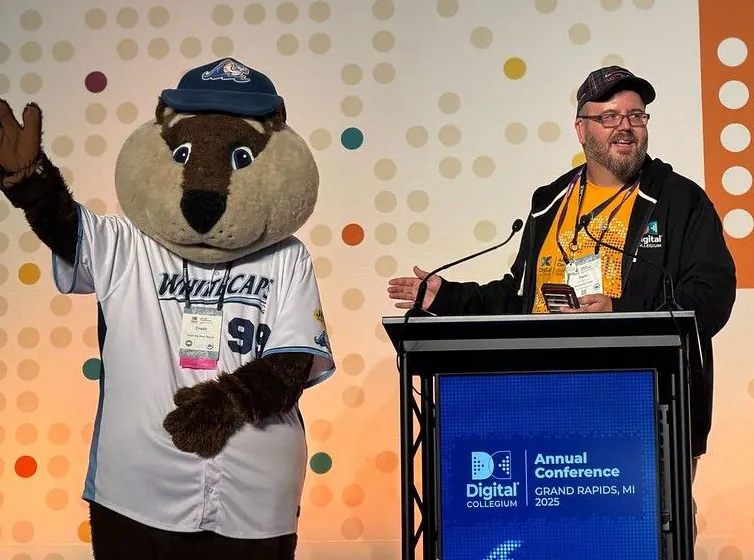
This was my first year attending the Digital Collegium Annual Conference, and I can see why it has such a loyal following. It’s not just another higher ed marketing event with recycled talking points. The sessions were sharp, the speakers didn’t sugarcoat things, and the hallway conversations were almost as valuable as what happened on stage.
What struck me most at Digital Collegium 2025, was how consistently the same themes kept popping up: the shifting reality of search in the AI era, the continued messiness of university websites, and the growing gap between what students need from websites and other marketing materials, and what institutions are actually delivering.
I left Grand Rapids with more questions than answers, but that’s a good thing! Because it means the conversations we had weren’t surface-level. They were real. And they pushed me (and I think a lot of us) to rethink how we approach digital strategy, enrollment, and brand in higher ed.
Here’s what stuck with me:
1. SEO isn’t dead, but the game has definitely changed.
We all know the search landscape has shifted, but the Digital Collegium sessions on AI-driven search really drove it home.
Faton Sopa summed it up perfectly: the old days of Google are gone. Visibility alone doesn’t matter anymore, it’s about credibility. Students aren’t just typing keywords into Google; they’re discovering colleges on YouTube (9 out of 10 teens are there), Reddit (#3 in U.S. search visits), and AI-powered overviews.
Some numbers that hit me:
- 58% of users never click search results.
- 36% of prospects think less of a college if it doesn’t show up in AI search.
That means if your institution isn’t present, clear, and credible in generative AI search, you’re losing ground.
The big shift: stop optimizing for traffic. Start optimizing for influence. Trust, relevance, and human behavior are the new metrics that matter.
2. AI search = zero-click, maximum convenience.
Adam Heidebrink-Bruno unpacked the rise of AI search, and honestly, it’s a bit of a reality check for higher ed.
Students love AI search because it cuts through the clutter:
- No endless tabs.
- No buried, 5-page PDFs.
- No clicking through outdated pages.
Instead, they get answers that are conversational, personalized, and contextual.
Most university websites are still a mess because they are often fragmented, decentralized, and built for internal politics rather than prospective students. This leads to thousands of unnecessary pages, buried key information (admissions, programs, costs), and navigation designed for staff instead of students. To address this, universities must prioritize student-centric design, ensuring core information is accessible in two clicks or less, program pages have clear next steps, and content is clean, streamlined, and mobile-first, speaking directly to prospects.
The playbook is simple (but not easy):
- Answer the questions prospects actually ask.
- Write in plain language.
- Eliminate friction in navigation and forms.
- Keep content clean, current, and accessible.
As Adam put it: “Embrace the zero-click lifestyle.” If students don’t need to land on your site to trust you, that’s a win.
Why are most university websites still a mess?
During the Digital Collegium Conference, this theme came up in multiple sessions—and I’ve been saying it for years. University websites are too often fragmented, decentralized, and built for internal politics instead of prospective students.
Here’s the reality:
- Most college sites are filled with thousands upon thousands of pages, when half (or less) would do.
- Key info on admissions, programs of interest, and costs are often buried.
- Navigation that’s designed for faculty and staff—not for the high school senior trying to figure out if they belong on your campus, or the adult learner looking for a clear and flexible path back to finish their degree.
If we know this is a problem, and the data (and probably our own gut) keeps telling us it is, why are we letting egos and internal silos dictate structure, design and content decisions? Your website should be your top recruiter. Period.
From a student’s perspective, here are the non-negotiables:
- Core info (programs, admissions, costs) needs to be easy to find in 2 clicks or less.
- Every program page has to have a clear next step.
- Universities need to prioritize mobile-first design (because that’s where your students are).
- Content should be clean, streamlined, and speak directly to prospects…not written to appease everyone on campus.
It’s not rocket science. But it does require leadership willing to cut through the noise and say: this site is for our future students first!
How does trust impact AI search, SEO, and website design?
Whether we’re talking AI search, SEO, or website design and user experience, the thread running through all of it is trust.
AmbioEdu helps institutions take action on these insights by enabling colleges and universities to reach students in smarter, more authentic ways. We achieve this through the power of storytelling, Performance TV, and data-driven insights that convert awareness into action. The tools and data are clear; it's time for marketers, designers, developers, communicators, and enrollment leaders to make the changes students are waiting for.
How can AmbioEdu help institutions take action on these insights?
I left the 2025 Digital Collegium Conference feeling energized and, honestly, a little impatient. The tools are there. The data is clear. Now it’s up to us—marketers, designers, developers, communicators, and enrollment leaders—to finally make the changes students have been waiting for.
At AmbioEdu, that’s what drives us. We help colleges and universities reach students in smarter, more authentic ways, through the power of storytelling, Performance TV, and data-driven insights that turn awareness into action. If you’re ready to rethink how your institution connects with prospective students, let’s start that conversation.